Diesel Just Hit a Record $6 a Gallon. Here Is What the Iran War Is Doing to Your Grocery Bill
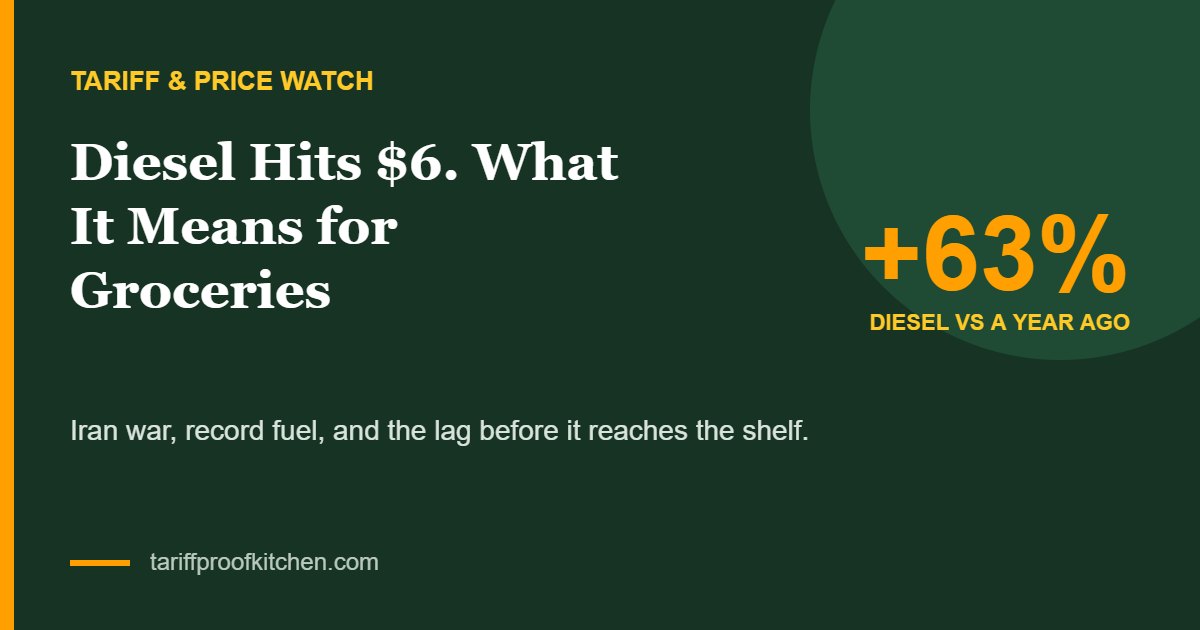
- Diesel hit a record $6.06 a gallon on September 11 (AAA), up about 63% from a year earlier; gasoline is $4.30, up 34%.
- Brent crude has been above $100 since the conflict began on February 28, 2026, after roughly $70 before the war.
- August CPI (released September 11): energy +16.3% year over year, food at home only +2.4% and flat on the month.
- The grocery lag is real but temporary: diesel runs trucks, tractors and refrigeration, and fertilizer follows natural gas. Expect perishables to move first.
If your last fill-up hurt, your grocery receipt has been surprisingly polite. That is the strange shape of this fuel shock: pump prices are at or near record highs while supermarket prices have barely moved in the official data. This piece explains why, how long the gap usually lasts, and which aisles catch up first.
The numbers as of September 19, 2026
| Indicator | Latest | Change |
|---|---|---|
| Diesel, US average (AAA, Sept 11) | $6.06/gal, record | +63% vs a year ago |
| Gasoline, US average (AAA, Sept 11-15) | $4.30/gal | +34% vs a year ago |
| Brent crude (Sept 10-15) | $104-108/bbl | ~$70 before Feb 28 |
| CPI, all items (August, released Sept 11) | +3.4% y/y | +0.4% m/m |
| CPI, energy (August) | +16.3% y/y | +2.1% m/m |
| CPI, food at home (August) | +2.4% y/y | 0.0% m/m |
CNN estimated on September 8 that households had already paid about $55 billion more for gasoline since the war began, roughly $422 per household, plus about $348 per household in extra diesel costs embedded in goods and services. Those are spending estimates, not a measure of how much the war has added to inflation, and none of the sources we reviewed publishes a clean attribution yet.
Why groceries have not moved yet
Three reasons. First, contracts: most retail food is bought on 30-90 day supply agreements, so today's diesel price reaches the shelf next quarter, not this week. Second, retailers absorbed the first wave, exactly as they did with tariffs in 2025, because nobody wants to be the first chain to reprice milk. Third, August food-at-home was flat partly because summer produce and a strong domestic harvest pulled the other way.
None of that is permanent. Diesel powers the trucks that restock perishables several times a week, the tractors that harvest, and the refrigeration in between. Fertilizer prices track natural gas, which moves with the same crisis. Historically, a sustained fuel shock shows up in produce, meat and dairy within two to four months and in packaged goods within six.
What catches up first
- Fresh produce and berries: highest freight share of price, most frequent restocking. Winter imports from Mexico get the diesel hit on top of the tariff hit.
- Meat and dairy: refrigerated transport plus feed costs. Beef is already up 10-15% for supply reasons.
- Bottled beverages and heavy canned goods: cheap to make, expensive to move.
- Last to move: rice, dried beans, pasta, oats and flour. Long contracts, low weight per calorie, and mostly domestic. These are the tariff-proof staples for a reason.
What to do this month
- Shift the weekly basket toward the low-exposure staples on our tariff-proof grocery list; they are also the low-freight staples.
- Buy frozen instead of fresh for out-of-season produce. It moved once, in bulk, months ago.
- If you were going to stockpile shelf-stable items, the window is now, before Q4 contracts reset. Our stockpiling guide covers how much is enough.
- Consolidate trips. Your own diesel bill counts too.
Sources
- AAA / market reports, Sept 11, 2026 — US diesel hits record $6.06 a gallon
- BLS, Consumer Price Index, August 2026 (Sept 11, 2026) — CPI news release
- CNN, Sept 8, 2026 — Household fuel spending since the war began
- Institute for Energy Research, Sept 2026 — Fuel oil and diesel at record highs
Frequently Asked Questions
See What This Does to Your Bill
Run the free Tariff Grocery Calculator: 12 questions, your Tariff Exposure Score and the swaps that cut it. Then the full 90-day system for $7.99.
Run the Calculator (free)