How Tariffs Affect Shrimp and Seafood Prices in 2026 (+10-18%)
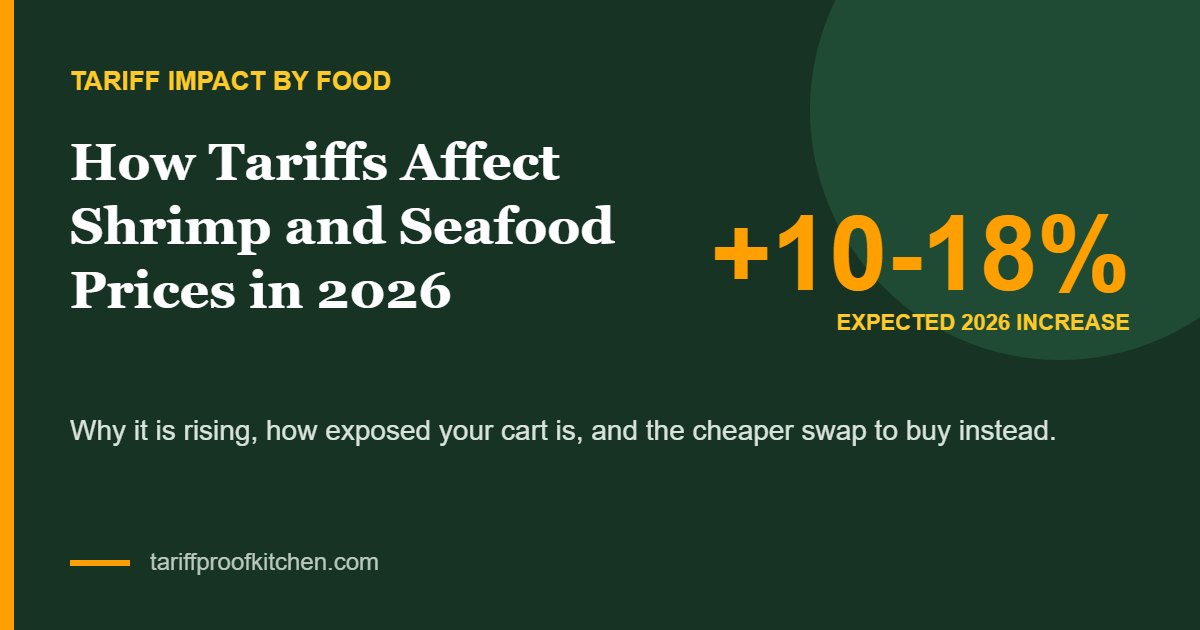
- Expected 2026 price change: +10-18%
- Tariff exposure: High — main origin: India, Ecuador, Indonesia, Vietnam
- Typical family-of-4 spend: about $20 per month
- Best swap: Canned tuna and salmon, US-caught frozen fish on sale, Gulf shrimp when discounted
Over 90% of shrimp sold in the US is imported, mostly from India, Ecuador, Indonesia and Vietnam, all facing new tariff rates.
What it costs you
| Metric | Shrimp and Seafood |
|---|---|
| Expected 2026 increase | +10-18% |
| Tariff exposure level | High |
| Main origin | India, Ecuador, Indonesia, Vietnam |
| Typical monthly spend (family of 4) | $20 |
| Shelf life / stockpile window | Frozen: 6 months. Canned: 3+ years |
At a typical spend of $20 a month, a +10-18% increase adds only a few dollars on its own. The problem is that shrimp and seafood rarely travels alone: households that buy it weekly usually buy several other exposed categories too, and the total quietly reaches $30-80 a month. Run the Tariff Grocery Calculator to see your combined number.
The swap that works
Canned tuna and salmon, US-caught frozen fish on sale, Gulf shrimp when discounted. The goal is not to give up shrimp and seafood entirely, but to move the everyday purchase to a lower-exposure version and keep the imported one for when it is on promotion.
Other foods to check
Frequently Asked Questions
Stop Overpaying at the Grocery Store
The Tariff-Proof Kitchen gives you 90 days of meal plans, 40+ budget recipes, and a complete shopping system designed for 2026 prices. Save $200+/month starting this week.
Get the Full Guide — $7.99