How Tariffs Affect Pasta Prices in 2026 (+10-15%)
Last updated . We revise figures when USDA, BLS or tariff notices change.
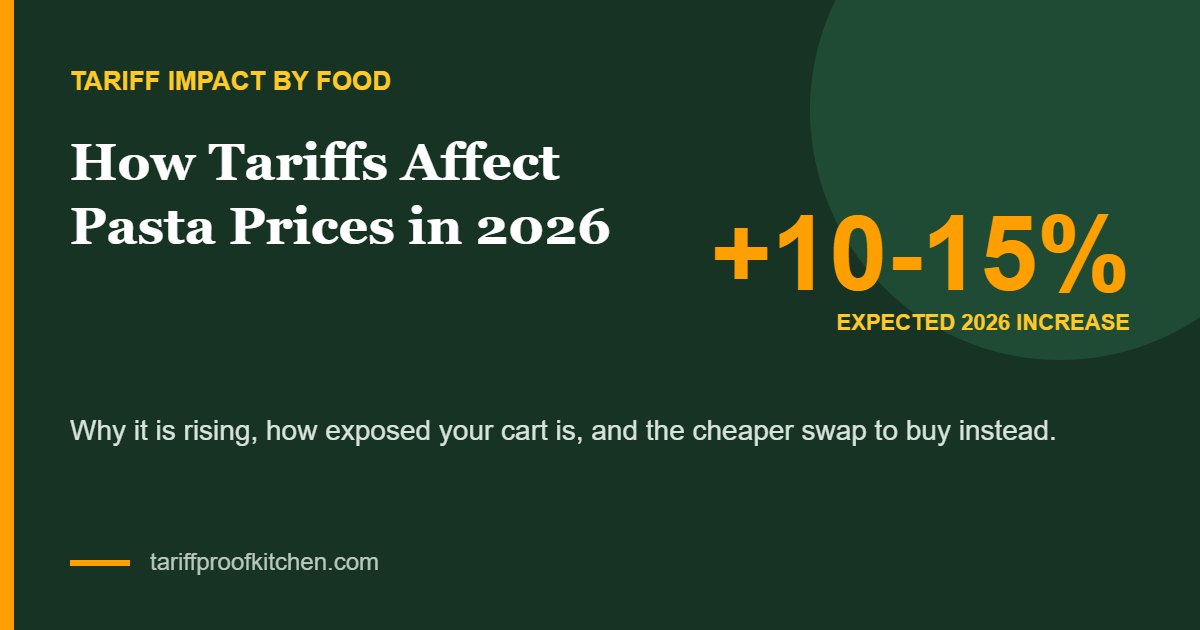
- Expected 2026 price change: +10-15%
- Tariff exposure: Moderate, main origin: Italy (imported brands), US (store brands)
- Typical family-of-4 spend: about $12 per month
- Best swap: US-made store-brand pasta, same durum wheat at 40-60% less
Key facts
- Imported Italian pasta has been subject to US anti-dumping duties since 1996; 2026 tariffs apply on top (US ITC).
- Pasta is expected to change by +10-15% in 2026, according to our reading of USDA 2026 food price forecasts and published tariff schedules (updated September 19, 2026).
- Exposure level for pasta in the Tariff Exposure Score framework: Moderate.
Imported Italian pasta already carried anti-dumping duties; new tariffs add to them. Domestic pasta is largely unaffected.
What it costs you
| Metric | Pasta |
|---|---|
| Expected 2026 increase | +10-15% |
| Tariff exposure level | Moderate |
| Main origin | Italy (imported brands), US (store brands) |
| Typical monthly spend (family of 4) | $12 |
| Shelf life / stockpile window | Dry: 2+ years |
This is the easiest swap on the list because the product is nearly identical. Store-brand dry pasta is made from the same durum semolina, usually in a US plant, at $0.94 to $1.12 a pound. Imported Italian brands run $2 to $3 and now carry both anti-dumping duties and new tariffs. Run the Tariff Grocery Calculator to see how much of your own basket sits in exposed categories.
The swap that works
US-made store-brand pasta, same durum wheat at 40-60% less. If you want the bronze-die texture for one Sunday dinner, buy one box of the import for that. For weeknights, nobody at the table can tell the difference under sauce. A 12 lb stockpile keeps two years.
Other foods to check
Frequently Asked Questions
Stop Overpaying at the Grocery Store
The Tariff-Proof Kitchen gives you 90 days of meal plans, 40+ budget recipes, and a complete shopping system designed for 2026 prices. Save $200+/month starting this week.
Get the Full Guide — $7.99